
If you are unsure what to wear to a funeral, choose clean, understated clothes that are slightly more formal than your everyday outfit. Black is reliable but not mandatory; navy, charcoal, deep brown, and other muted colors also work. Keep prints small, jewelry quiet, necklines and hems modest, and shoes polished enough for the setting. A dark suit is suitable, but tailored trousers with a collared shirt, sweater, blouse, blazer, or simple coat can be equally respectful. Most importantly, follow any request from the family or faith community. This guide covers the safest defaults and the exceptions, while the style journalhas more outfit guidance for other real-life occasions.
Start with the family, faith, and type of service
Funeral clothing is not governed by one universal color rule. The family may ask guests to wear the deceased person's favorite color, team jersey, uniform, cultural dress, or bright clothing for a celebration of life. That instruction outranks a generic dress guide. If the invitation or funeral home notice is silent, ask a close relative only when doing so will not add to their burden; otherwise use the understated default below.
Religious customs can affect head coverings, sleeves, hemlines, and formality. For example, Chabad's overview of a Jewish funeral recommends respectful attire and notes that men cover their heads, with a kippah often available at the service. When attending a tradition unfamiliar to you, read the family's instructions or a reliable guide from that community instead of guessing. See the currentChabad funeral overviewfor that specific example.
The safest funeral outfit formula
Think in three layers: a quiet base, one structured layer, and practical shoes. A base might be dark trousers and a shirt, a knee- or midi-length dress, a modest skirt and top, or a simple jumpsuit. A blazer, cardigan, coat, or matching jacket adds polish. Closed-toe loafers, flats, low heels, boots, or clean minimal dress shoes finish the outfit.
Before buying anything, work with the most subdued pieces you already own. You can also use the AI Outfit Generatorafter choosing a respectful formula to preview how the pieces read together. The tool can help with visualization; it does not replace the family's instructions or cultural etiquette.
| Starting point | Reliable formula | Useful adjustment |
|---|---|---|
| Dark suit | Suit + plain shirt or blouse + polished shoes | Keep the tie or jewelry subdued |
| Polished separates | Dark trousers + simple top + blazer or cardigan | Match the level of formality through fabric |
| Dress or skirt | Modest dress or skirt + quiet top + structured layer | Add opaque tights or a coat in cold weather |
| Gender-neutral | Tailored trousers + knit or button-down + clean jacket | Use fit and finish instead of gendered rules |
| Children | Comfortable neat clothes at adult-level formality | Avoid fussy pieces they cannot sit in |
| No suit available | Dark chinos + collared shirt or fine knit + clean shoes | Borrow a blazer only if it feels natural |
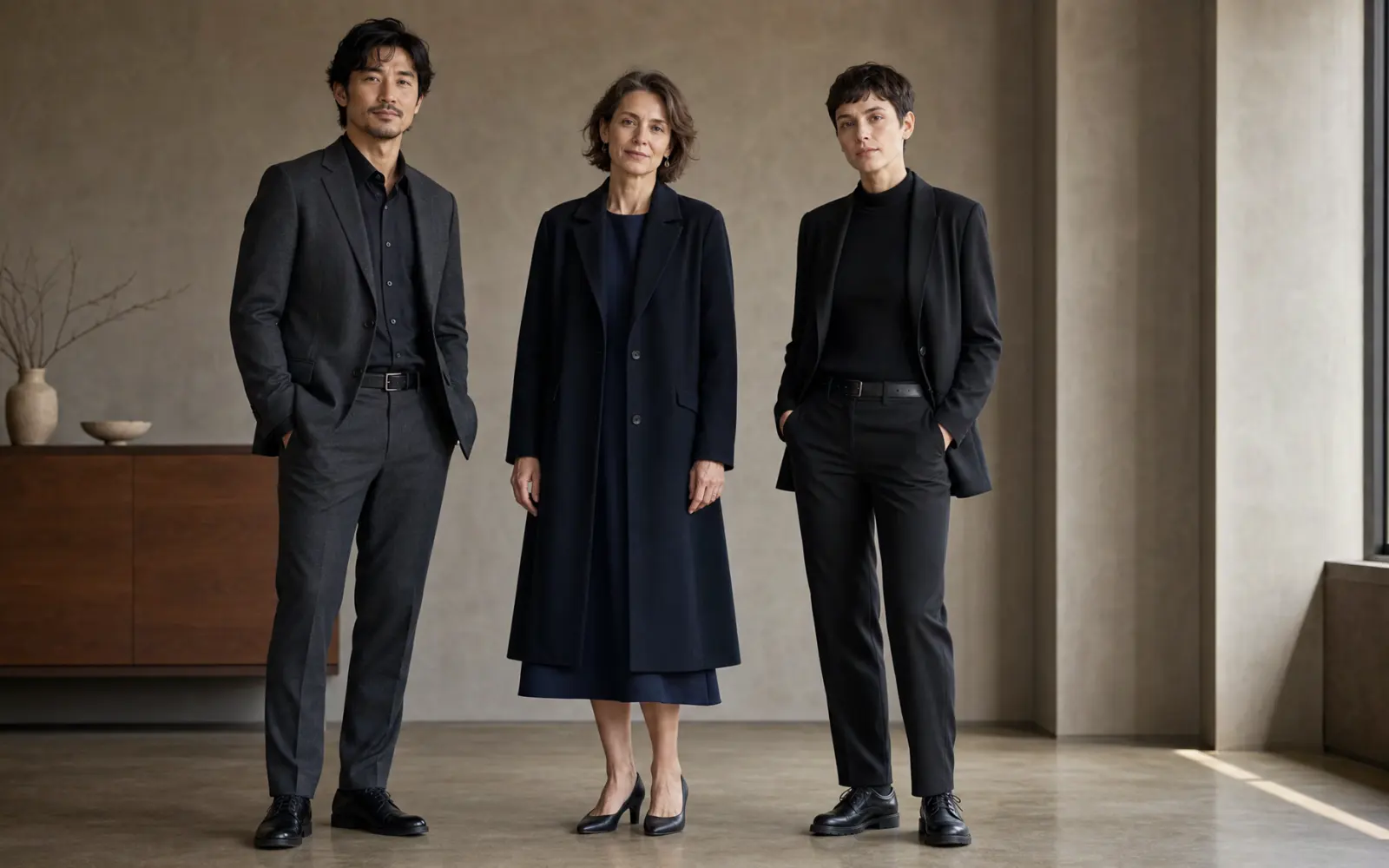
What to wear to a funeral for men
For men, the most dependable choice is a black, charcoal, or navy suit with a white, pale blue, or similarly quiet shirt. A dark tie is conventional but not always necessary. If the service is less formal, dark trousers, a button-down shirt, and a blazer or fine-gauge sweater are enough. Choose leather shoes, loafers, or clean minimal shoes that suit the venue.
If you are searching for what to wear at a funeral for guys who do not own formalwear, do not panic-buy a cheap suit. Dark chinos, a tucked collared shirt, and a plain jacket look more considered than an ill-fitting suit. Remove loud logos, novelty ties, sporty caps, and attention-grabbing sneakers. A clean, familiar outfit worn carefully is the better choice.
What to wear to a funeral for women
A woman can wear a modest dress, a skirt with a blouse or knit, a tailored trouser outfit, or a simple jumpsuit with a jacket. Dresses do not need to be black, and pants are fully appropriate for most services. Look for opaque fabric, a comfortable neckline, sleeves or an easy layering option, and a hem that lets you sit, stand, and walk without adjustment.
Advice phrased as what to wear to a funeral for a female often becomes unnecessarily restrictive. Use the same useful test applied to any guest: is the outfit quiet, neat, modest enough for the community, and practical for the setting? Flats, loafers, low block heels, or boots are often more useful than narrow heels, especially at a cemetery.
Gender-neutral options and what to wear without a suit
Funeral attire does not have to follow a gendered template. Tailored trousers with a button-down, turtleneck, fine knit, vest, blazer, or simple coat can create a respectful outfit without a dress or conventional suit. A tonal combination— charcoal trousers, a dark gray knit, and a black coat, for example—looks intentional without drawing attention.
If you are working from a portrait and want to compare a blazer, sweater, or coat direction before deciding, theAI Clothes Changerlets you describe a different outfit. Treat the result as a planning preview, then check the real garment's fit, opacity, and condition in daylight.
What colors can you wear besides black?
Black is a safe signal of formality, not a universal requirement. Emily Post's funeral etiquette guidance says attire need not be limited to black and dark gray, while emphasizing that clothes should be clean, neat, and pressed for a serious occasion. Read the fullEmily Post funeral etiquette guidanceif you want a broader etiquette reference.
Navy, charcoal, espresso, taupe, deep olive, forest green, muted burgundy, and dusty neutrals usually work well. A pale shirt under a dark layer is also fine. The question is less “Is this color allowed?” and more “Does this color make me the focal point?” Save neon tones, large high-contrast prints, heavy sparkle, and conspicuous branding for another day— unless the family explicitly requests joyful color.
Adjust the outfit for the service type
Traditional funeral or memorial service
Choose the most formal version of your available clothes: a suit, tailored separates, a modest dress, or dark trousers with a structured layer. Houses of worship may be cool inside and may have specific expectations about shoulders, head coverings, or footwear, so bring a layer and check the notice.
Celebration of life
These gatherings range from formal to intentionally casual. Follow the invitation. If it says “wear blue” or asks for a favorite team's colors, honor the request while keeping the outfit tidy. When no dress direction is given, subdued smart casual clothing remains a safe choice.
Graveside or outdoor service
Practicality matters more outdoors. Choose shoes that remain stable on wet grass, gravel, or uneven ground, and add a coat, umbrella, hat, or sun protection as the forecast requires. The U.S. Department of Veterans Affairs notes that committal shelters at national cemeteries provide only temporary protection from wind, rain, or sun, so plan for exposure even when a shelter is present. See theVA committal shelter guidancefor the setting details behind that advice.
Funeral outfits by season and weather
Summer
Use breathable but opaque fabrics such as lightweight wool, cotton poplin, linen blends, or matte crepe. A short sleeve can be appropriate, but bring a light cardigan or jacket for an air-conditioned chapel. Avoid beachwear, flip-flops, sheer fabric, and anything so tight or delicate that heat makes it uncomfortable.
Winter
For a winter funeral, build warmth under the formal layer: thermal hosiery, a fine merino knit, wool trousers, a dark overcoat, gloves, and weather-ready boots. You may remove the coat indoors, so make sure the outfit beneath it still feels complete. Keep salt and rain in mind when choosing footwear.
Rain, snow, or extreme heat
Safety outranks a perfect silhouette. Wear the stable shoes, insulating layer, sun hat, or raincoat you need. A practical dark outer layer will not be read as disrespectful. If you are unsure how a combination looks together, make a visual check with the outfit preview tool, then judge the real clothes for comfort and weather protection.
What not to wear to a funeral
Avoid clothes that are dirty, badly wrinkled, visibly damaged, very revealing, or designed to command attention. That often includes large logos, slogan shirts, nightclub clothing, distressed denim, athletic wear, flip-flops, and noisy jewelry. Strong fragrance can also be difficult in a close indoor gathering. None of these are moral rules; they are ways to reduce distraction on a day centered on the bereaved.
There are exceptions. A uniform may be appropriate. Jeans may be right for an informal rural service. A vivid scarf may be a family request. Traditional cultural clothing may carry more respect than Western formalwear. Context always beats a rigid internet checklist.
A two-minute check before you leave
- Confirm that you have not missed a dress request from the family or venue.
- Sit, stand, bend, and walk in the full outfit, including the coat.
- Check that fabric is opaque and clothes are clean, pressed, and comfortable.
- Choose shoes for the floor, grass, gravel, rain, or snow you will encounter.
- Bring one useful layer and silence your phone before the service.
If you upload a photo to plan a look, review the site'sprivacy information first. The final decision should still be based on your real garment, the venue, and any guidance from the family.
Common questions
Funeral attire FAQ
Is it okay for a woman to wear pants to a funeral?
Yes. Tailored trousers with a modest blouse, knit, blazer, or structured coat are appropriate for most funerals. Choose a subdued color, an opaque fabric, and a polished fit. A dress or skirt is not required unless the family or faith tradition has given more specific guidance.
Can I wear jeans to a funeral?
Dark, clean jeans may be acceptable for a very informal service when you know the family would be comfortable with them, but they are not the safest default. If possible, choose dark chinos, plain trousers, or another polished pair of pants instead.
What if I do not own a suit?
You do not need to buy a suit for most services. Wear dark trousers with a collared shirt, fine-gauge sweater, blazer, or simple jacket. Clean shoes and a neat fit matter more than matching suit pieces.
Do I have to wear black to a funeral?
Usually not. Black remains a reliable choice, but charcoal, navy, deep brown, forest green, burgundy, and other muted colors can also be respectful. Avoid making a bright color or bold pattern the visual focus unless the family has specifically requested it.
What should children wear to a funeral?
Choose clean, comfortable clothes at roughly the same formality as the adults: a simple dress, trousers with a shirt or sweater, or another neat outfit in a quiet color. Comfort matters because children may be sitting or standing for an extended period.
What should I wear to a graveside service in bad weather?
Add a weatherproof coat, stable closed-toe shoes, and a compact umbrella when appropriate. Avoid thin heels on grass or gravel. Bring layers because cemetery shelters may provide only limited protection from wind, rain, or sun.
The goal is care, not perfection
A respectful funeral outfit is clean, quiet, comfortable, and appropriate to the family's wishes. You do not need a new wardrobe or a flawless formal look. Choose the most considered option you already have, prepare for the venue, and let your presence—not your clothes—carry the meaning. For more situation-based decisions, return to the AI Outfit Generator journal.